
Why Hidden Loan Fees Can Turn an Affordable Loan Into an Expensive Mistake
A personal loan can be a helpful financial tool when you need money for an emergency, home repairs, education, medical bills, or debt consolidation. Many lenders advertise low interest rates and easy approval, making the loan look affordable at first glance.
The real cost of a loan, however, is not always shown in large text. Many borrowers focus only on the monthly payment and interest rate while ignoring the additional fees listed deep inside the loan agreement. These hidden charges can increase the total amount you repay by hundreds or even thousands of dollars.
If you understand these fees before signing the agreement, you can make a better financial decision and avoid unpleasant surprises later.
Many people discover these costs only after receiving their loan funds. At that point, changing the agreement is often impossible, leaving them with higher monthly payments than expected.
A personal loan should make your financial situation easier—not create extra stress because of costs you never planned for.
Common Problems Borrowers Face
Many borrowers struggle because they:
Compare only interest rates instead of total loan costs.
Skip reading the complete loan agreement.
Assume every lender charges the same fees.
Feel pressured to sign quickly without asking questions.
Do not understand financial terms used in loan documents.
Trust advertisements without checking the complete fee schedule.
These small mistakes can lead to expensive consequences that continue throughout the loan period.
Why So Many People Miss Hidden Fees
Loan agreements often contain many pages of legal language. While the information is usually available, it may not be easy for the average borrower to understand.
Some borrowers believe asking questions will delay approval. Others feel embarrassed because they are unfamiliar with financial terms. As a result, they sign documents without fully understanding what they are agreeing to.
Another common problem is relying on online advice from unreliable sources. Social media posts and short videos sometimes oversimplify the borrowing process, making personal loans appear easier and cheaper than they actually are.
Financial decisions deserve careful research instead of quick assumptions.
The Emotional Cost of Unexpected Loan Charges
Unexpected loan fees do more than increase your expenses.
They can affect your daily life in many ways.
Your monthly budget becomes harder to manage.
Emergency savings may disappear faster than planned.
Financial confidence begins to decline.
Family budgeting becomes more stressful.
Unexpected deductions create frustration and disappointment.
Long-term financial goals may need to be postponed.
Many borrowers describe feeling frustrated because they believed they had chosen the best loan available. Only later did they realize the actual borrowing cost was much higher than expected.
Financial stress often affects sleep, work performance, and relationships. Even a relatively small hidden fee can create long-term pressure when combined with monthly loan payments and other household expenses.
The good news is that most hidden loan fees can be avoided simply by learning what to look for before signing any documents. A little extra time spent reviewing the agreement today can save a significant amount of money in the future.
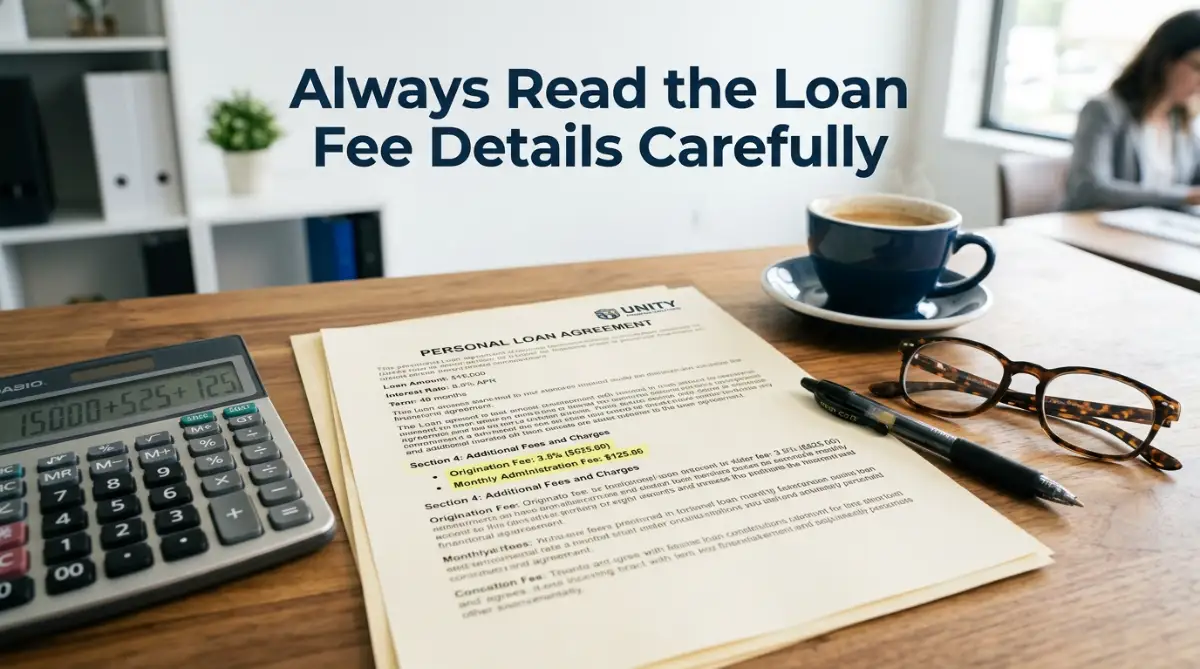
Look Beyond the Interest Rate Before Comparing Loans
Many lenders compete by advertising attractive interest rates. While interest is important, it represents only one part of your borrowing cost.
Before comparing two loans, always calculate the total borrowing cost, including every fee that may apply during the life of the loan.
A loan with a slightly higher interest rate but fewer fees may actually cost less overall than one with a lower advertised rate.
Check the Total Cost Instead of the Monthly Payment
Monthly payments can sometimes create a false impression.
A lower monthly payment may simply mean the repayment period is longer, allowing additional interest and fees to accumulate over time.
Instead of asking, "How much will I pay each month?", ask:
How much money will I repay in total?
Which fees are included?
Which fees could be added later?
Are any charges optional or mandatory?
These questions provide a much clearer picture of the real cost of borrowing
Review Every Fee Before Signing Any Documents
A loan agreement is more than a promise to repay borrowed money. It also explains the costs, conditions, and responsibilities that come with the loan. Reading each section carefully can help you avoid expensive surprises.
Never feel rushed into signing paperwork. A trustworthy lender should give you enough time to review the agreement and answer your questions.
Watch for Processing Fees
Many personal loans include a processing fee. This fee covers administrative work related to reviewing your application and preparing the loan.
Sometimes the fee is deducted from the loan amount before you receive the money.
For example, imagine you apply for a $10,000 personal loan. If the lender charges a 2% processing fee, you may receive only $9,800, while still repaying the full $10,000 plus interest.
This is why you should always ask how much money will actually reach your bank account.
Understand Origination Charges
Some lenders charge an origination fee, which is another upfront cost for creating the loan.
Although processing fees and origination fees may sound similar, they are not always the same. Some lenders charge one, while others charge both.
Always ask for a complete breakdown of every upfront charge before accepting the loan.
Learn About Late Payment Fees
Life does not always go as planned. Missing a payment because of an emergency can result in additional costs.
Late payment fees vary between lenders, and repeated missed payments may also affect your credit history.
Before borrowing, ask:
How many days are allowed before a payment is considered late?
What is the late payment charge?
Will additional interest be added?
Does a late payment affect my credit report?
Knowing these answers helps you prepare for unexpected situations.
Check for Early Repayment Penalties
Many people hope to repay their loans early after receiving extra income, a tax refund, or a salary increase.
While paying off debt early often saves interest, some lenders charge an early repayment penalty.
This fee can reduce or even eliminate the savings you expected.
Before signing, ask whether you can make:
Extra monthly payments
Partial repayments
Full repayment before the scheduled end date
Without any additional charges.
Ask About Returned Payment Fees
Sometimes a payment fails because of insufficient funds or banking errors.
If this happens, some lenders charge a returned payment fee.
Although the amount may appear small, repeated failed payments can quickly become expensive.
Setting up automatic reminders or maintaining enough money in your account can help reduce this risk.
Read the Fine Print With Confidence
Many borrowers skip the fine print because it contains legal language.
Instead of skipping it, read slowly and highlight anything you do not understand.
Pay close attention to sections discussing:
Additional service charges
Variable fees
Payment schedules
Loan modifications
Collection procedures
Account maintenance costs
If something seems unclear, ask for a simple explanation before signing.
A good lender should explain every charge in language you understand.
Compare More Than One Lender
One of the biggest mistakes borrowers make is accepting the first loan offer they receive.
Even spending one extra day comparing lenders can lead to significant savings.
When comparing loans, review:
Interest rate
Processing fee
Origination fee
Late payment policy
Early repayment policy
Customer support quality
Total repayment amount
Looking at the complete picture helps you choose the loan that best fits your financial needs.
Create Your Own Loan Cost Checklist
Before signing any loan agreement, prepare a simple checklist.
Include questions such as:
What is the total amount I will repay?
Which fees are charged before I receive the loan?
Can fees increase later?
Is there a penalty for paying early?
What happens if I miss one payment?
Are there any optional products or services included?
Can I receive all fees in writing?
Having a checklist makes it easier to compare offers and reduces the chance of overlooking important details.

A Real-Life Example
Imagine two lenders offering the same loan amount.
Lender A advertises a lower interest rate but charges a high processing fee, an origination fee, and an early repayment penalty.
Lender B offers a slightly higher interest rate but has no origination fee, lower processing costs, and allows early repayment without penalties.
At first glance, Lender A appears cheaper.
After calculating the total borrowing cost, however, Lender B may actually save you money over the life of the loan.
This example shows why the lowest advertised interest rate is not always the best deal.
Build Better Borrowing Habits
Smart borrowing starts long before you submit a loan application.
Take time to improve your financial knowledge, compare lenders carefully, and ask questions whenever something seems unclear.
Every loan agreement deserves your full attention because even a single overlooked fee can increase the total cost of borrowing.
By understanding hidden personal loan fees, you can protect your budget, make informed financial decisions, and borrow with greater confidence.
Advanced Ways to Avoid Hidden Personal Loan Fees
Borrowing money is a major financial decision. Before accepting any personal loan, you should understand every possible cost connected with it.
Many borrowers focus only on getting approved quickly. However, a smart borrower looks beyond approval and studies the complete loan structure.
The goal is not only to get a loan. The goal is to choose a loan that remains affordable throughout the repayment period.
Create a Complete Loan Cost Checklist
Before signing any agreement, prepare a simple checklist to review all possible charges.
Your checklist should include:
Application fees
Processing charges
Origination fees
Late payment charges
Early repayment penalties
Account maintenance fees
Additional service costs
A checklist prevents you from forgetting important details when reviewing multiple loan offers.
Many people make decisions based on emotions, especially when they urgently need money. A written checklist helps you stay focused and make a logical choice.
Ask Direct Questions Before Accepting a Loan
Never hesitate to ask questions about fees and conditions.
A responsible borrower should clearly understand:
How much money will I actually receive?
What is the total amount I need to repay?
Are there any fees deducted before receiving the funds?
Can any charges increase later?
Are there penalties for changing repayment plans?
Clear answers can protect you from unexpected financial pressure.
A loan agreement should never feel confusing. If you do not understand a term, ask for an explanation in simple language before making a commitment.
Avoid Making Decisions Under Pressure
Some borrowers accept loan offers because they feel they have limited time.
Pressure can lead to mistakes.
Take enough time to compare the full details, even if you need money urgently.
A few extra minutes of careful review can help you avoid months or years of unnecessary costs.
Smart financial decisions come from understanding, not rushing.
Common Mistakes Borrowers Make With Hidden Loan Fees
Many people face problems with personal loans not because borrowing is always a bad choice, but because they overlook important details before signing the agreement.
Understanding common mistakes can help you make safer financial decisions and avoid unnecessary expenses.
Mistake 1: Focusing Only on the Interest Rate
One of the most common mistakes is choosing a loan based only on the advertised interest rate.
A low interest rate may look attractive, but it does not always represent the complete cost of borrowing.
Some loans with lower interest rates may include additional charges that increase the total repayment amount.
Always compare the complete loan cost, not just the interest rate.
Look at:
Total repayment amount
Upfront fees
Additional charges
Payment conditions
Penalty policies
A complete comparison gives you a more accurate understanding of which loan is truly affordable.
Mistake 2: Ignoring the Loan Agreement Details
Many borrowers quickly accept loan documents without carefully reading every section.
Loan agreements often contain important information about fees, payment rules, and borrower responsibilities.
Skipping these details can create unexpected problems later.
Before signing, carefully review:
Fee sections
Repayment terms
Late payment rules
Early repayment conditions
Additional service charges
If any section seems unclear, ask questions before agreeing.
Mistake 3: Borrowing More Than Necessary
Another common mistake is taking a larger loan amount than required.
A bigger loan may feel helpful at first, but it usually means:
Higher monthly payments
More interest costs
Longer repayment pressure
Greater financial responsibility
Before applying, calculate exactly how much you need and avoid borrowing extra money without a clear purpose.
Borrow only what you can comfortably repay.
Mistake 4: Not Planning for Unexpected Situations
Many borrowers create a repayment plan but forget that financial situations can change.
Unexpected expenses, job changes, or emergencies can make monthly payments difficult.
A better approach is to consider possible challenges before accepting the loan.
Ask yourself:
Can I continue payments if my income changes?
Do I have emergency savings?
Is the monthly payment realistic for my budget?
Planning ahead reduces financial stress and helps you stay in control.
Warning Signs That a Personal Loan May Include Hidden Charges
Before accepting any personal loan, it is important to identify warning signs that may indicate unexpected costs. Many borrowers only discover problems after they have already signed the agreement.
A careful review before borrowing can protect your money and prevent unnecessary financial pressure.
The Loan Terms Are Not Clearly Explained
A trustworthy lender should explain all important loan conditions in a simple and understandable way. If the terms are confusing or important details are avoided, you should take extra time to review everything.
Pay attention when:
- The lender avoids explaining specific fees.
- The agreement contains unclear charges.
- You are encouraged to sign without reading.
- Your questions are not answered properly.
Transparency is one of the strongest signs of a reliable lending process.
You Notice Unexpected Charges During the Application Process
Some fees may appear during different stages of the loan process. If a charge was never explained earlier, ask for a clear reason before continuing.
Always request a complete breakdown of costs, including any amount deducted from the loan before you receive the funds.
The Monthly Payment Looks Too Good to Be True
A very low monthly payment can sometimes hide a longer repayment period or additional costs.
Instead of looking only at the monthly amount, check the total repayment amount and understand how much the loan will actually cost you over time.
The cheapest-looking payment is not always the most affordable option.
How to Compare Personal Loans Like a Smart Borrower
Choosing the right personal loan requires more than comparing advertisements or looking at one attractive feature. A smart borrower evaluates every important detail before making a final decision.
The best loan option is the one that matches your financial situation and keeps the total cost manageable.
Compare the Total Cost of Borrowing
When comparing different personal loans, always look at the complete cost instead of focusing on a single factor.
A complete comparison should include:
- Total repayment amount
- Interest charges
- Processing and service fees
- Late payment conditions
- Early repayment rules
Two loans may have similar amounts but completely different costs because of additional fees and repayment conditions.
Review the Loan Agreement Before Making a Decision
The loan agreement contains important information about your responsibilities and the lender's conditions.
Before accepting any offer, carefully review:
- Payment schedule
- Fee structure
- Interest calculation method
- Possible penalties
- Rules for changing repayment terms
If you find any confusing section, request clarification. Understanding the agreement helps you avoid unexpected financial problems later.
Calculate Whether the Monthly Payment Fits Your Budget
A personal loan should fit comfortably into your monthly budget. A payment that feels manageable today may become stressful if your financial situation changes.
Before borrowing, review your regular expenses, savings goals, and emergency needs.
A realistic repayment plan protects your financial stability and reduces future stress.
Look for Clear and Transparent Information
Reliable lenders provide clear information about costs, repayment schedules, and borrower responsibilities.
Be careful if you notice:
- Hidden conditions
- Unexplained charges
- Pressure to make a quick decision
- Incomplete information about fees
Taking time to research and compare options can help you avoid costly mistakes and make a more confident borrowing decision
How to Compare Personal Loans Like a Smart Borrower
Choosing the right personal loan requires more than comparing advertisements or looking at one attractive feature. A smart borrower evaluates every important detail before making a final decision.
The best loan option is the one that matches your financial situation and keeps the total cost manageable.
Compare the Total Cost of Borrowing
When comparing different personal loans, always look at the complete cost instead of focusing on a single factor.
A complete comparison should include:
- Total repayment amount
- Interest charges
- Processing and service fees
- Late payment conditions
- Early repayment rules
Two loans may have similar amounts but completely different costs because of additional fees and repayment conditions.
Review the Loan Agreement Before Making a Decision
The loan agreement contains important information about your responsibilities and the lender's conditions.
Before accepting any offer, carefully review:
- Payment schedule
- Fee structure
- Interest calculation method
- Possible penalties
- Rules for changing repayment terms
If you find any confusing section, request clarification. Understanding the agreement helps you avoid unexpected financial problems later.
Calculate Whether the Monthly Payment Fits Your Budget
A personal loan should fit comfortably into your monthly budget. A payment that feels manageable today may become stressful if your financial situation changes.
Before borrowing, review your regular expenses, savings goals, and emergency needs.
A realistic repayment plan protects your financial stability and reduces future stress.
Look for Clear and Transparent Information
Reliable lenders provide clear information about costs, repayment schedules, and borrower responsibilities.
Be careful if you notice:
- Hidden conditions
- Unexplained charges
- Pressure to make a quick decision
- Incomplete information about fees
Taking time to research and compare options can help you avoid costly mistakes and make a more confident borrowing decision.
Expert Tips to Reduce the Total Cost of a Personal Loan
Reducing the cost of a personal loan is not only about finding a lower interest rate. It also requires understanding fees, planning repayments, and making smart financial choices before and after borrowing.
Small decisions can make a big difference in the total amount you pay over time.
Improve Your Financial Profile Before Applying
Your financial profile can influence the terms and conditions you receive from lenders. Before applying for a personal loan, take time to review your current financial situation.
You can improve your position by:
- Maintaining a strong payment history.
- Reducing unnecessary debts.
- Keeping your financial records organized.
- Creating a realistic monthly budget.
A better financial profile may help you access more suitable loan conditions and reduce unnecessary borrowing costs.
Borrow Only the Amount You Truly Need
One of the easiest ways to reduce loan costs is avoiding unnecessary borrowing.
Many people take extra money because it is available, but a larger loan usually means higher repayment responsibilities.
Before applying, ask yourself:
- What is the exact purpose of this loan?
- How much money do I actually need?
- Can I handle the monthly payments comfortably?
Borrowing only what you need can reduce both financial pressure and total repayment costs.
Make Payments on Time
Late payments can create additional expenses and may affect your financial reputation.
Creating a payment reminder system can help you stay organized.
Helpful methods include:
- Setting calendar reminders.
- Tracking payment dates in a budget planner.
- Keeping enough funds available before the due date.
Consistent payments help you avoid unnecessary charges and maintain better control over your finances.
Consider Paying More Than the Minimum When Possible
If your financial situation allows, making additional payments may help reduce the time needed to repay the loan.
However, always check the loan agreement first to understand whether extra payments involve any conditions or penalties.
Before making additional payments, confirm how the lender applies those payments to your loan balance.
Keep Records of All Loan Documents
Maintaining proper records can help you track your loan details and resolve any confusion in the future.
Keep copies of:
- Loan agreements.
- Payment receipts.
- Fee explanations.
- Communication with the lender.
Organized records make it easier to review your loan status and confirm that all charges are accurate.
By following these practical strategies, you can make better borrowing decisions and reduce the chance of paying unnecessary personal loan fees.
Frequently Asked Questions About Hidden Personal Loan Fees
What are hidden personal loan fees?
Hidden personal loan fees are additional charges that borrowers may not notice when first reviewing a loan offer. These costs can include processing fees, service charges, late payment fees, or other expenses connected with the loan.
Understanding these charges before borrowing helps you avoid unexpected financial pressure.
Why do lenders charge additional loan fees?
Lenders may charge additional fees to cover administrative work, loan processing, account management, or other services related to providing the loan.
However, borrowers should always receive clear information about these costs before agreeing to the loan terms.
How can I find hidden fees in a personal loan agreement?
Carefully review every section of the loan agreement, especially the parts related to fees, charges, penalties, and repayment conditions.
Look for terms such as:
- Processing charges
- Service fees
- Late payment costs
- Early repayment conditions
- Additional account charges
Is the lowest interest rate always the best loan option?
No. A loan with the lowest interest rate may still become expensive if it includes many additional fees.
The total borrowing cost is more important than the advertised interest rate alone.
Can I negotiate personal loan fees?
In some situations, borrowers may be able to discuss certain loan conditions or request clearer explanations about fees.
It is always helpful to ask questions and understand your options before accepting any agreement.
What should I check before signing a personal loan agreement?
Before signing, review:
- Total repayment amount
- All applicable fees
- Payment schedule
- Late payment rules
- Early repayment conditions
Final Thoughts on Avoiding Hidden Personal Loan Fees
Personal loans can be useful when managed carefully, but unexpected fees can make borrowing more expensive than planned.
The best way to protect yourself is to slow down, review every detail, and understand the complete cost before making a commitment.
A financially informed borrower does not only look for approval. They look for transparency, affordability, and long-term financial comfort.
By learning how hidden personal loan fees work, asking the right questions, and comparing loan options carefully, you can make smarter decisions and avoid unnecessary costs.
Remember that every loan agreement represents a financial responsibility. Taking time to understand the details today can help you maintain better control over your money in the future.


