I Learned the Hard Way Why One Coin Isn't Enough
I remember sitting at my small wooden desk three years ago, watching a red line on my screen. My heart was racing, and I could feel a cold sweat on my forehead. I had put every single cent of my savings into Bitcoin because everyone said it was the future. Then, in just one afternoon, the price crashed by twenty percent. I felt sick to my stomach because my entire financial safety net was tied to one single number. That was the moment I realized I was doing everything wrong.
I spent weeks feeling like a failure, wondering why I didn't see the signs. I thought I was being smart, but I was actually just gambling on one horse. My sleep was gone, and I kept checking my phone every five minutes. It wasn't just about the money anymore; it was about the constant fear of losing everything. I knew I had to change my way of thinking if I wanted to stay in this game without losing my mind.
Many people I talk to today are feeling that exact same stress. They see the big headlines about Bitcoin, and they jump in with both feet. They think that owning one type of digital asset is enough to make them wealthy. But when the market gets shaky, they feel the sting of every price drop. This constant worry ruins their day, affects their work, and keeps them from enjoying life.
It is honestly hard to stay calm when you see your hard-earned money disappearing on a screen. You feel like you are on a roller coaster that only goes down. This mental pressure is heavy, and it makes people make bad choices. They sell when they should stay, or they buy more out of panic. It is a cycle of stress that never seems to end for the average person.
The truth is, relying on just one asset is like building a house on a single pillar. If that pillar cracks, the whole thing falls down. I see so many people struggling because they don't have a plan. They are just following the crowd and hoping for the best. But hope is not a good strategy when it comes to your financial future and peace of mind.
I decided to stop being a victim of the market's mood swings. I started looking for a way to spread my risk so I could sleep better at night. I wanted a plan that didn't leave me broken every time Bitcoin had a bad day. That is how I developed the framework I am going to share with you today. It changed my life, and I believe it can help you too.
Building a Strong Foundation with Smart Contract Platforms
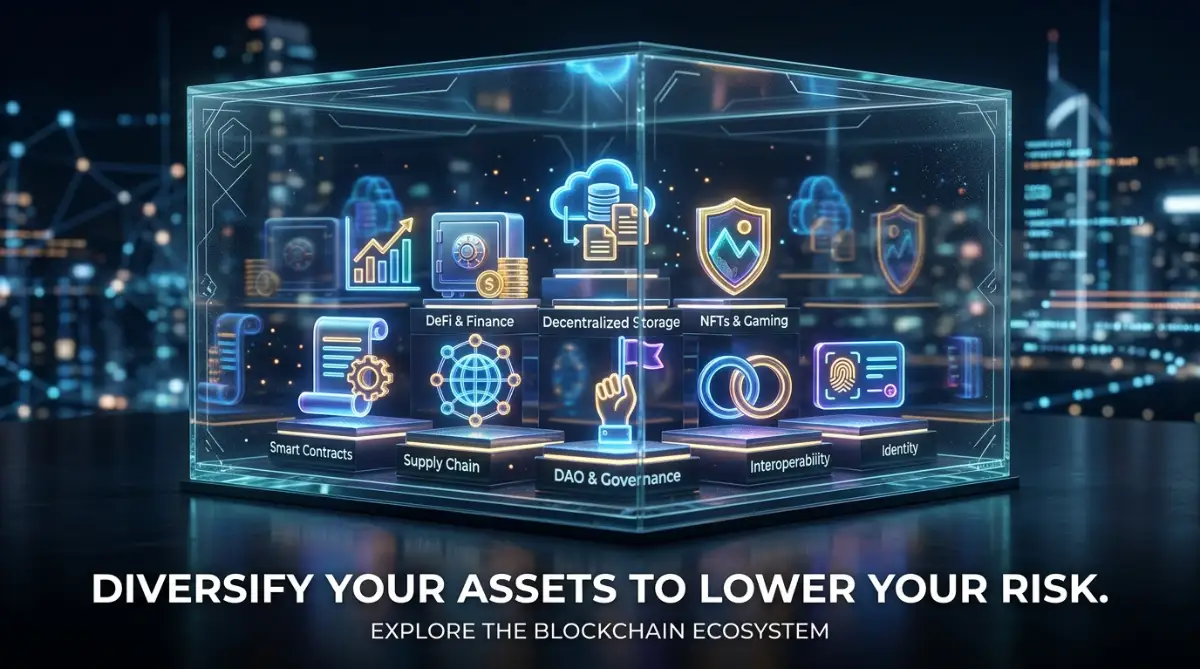
The first thing I learned is that not all digital assets are the same. Bitcoin is often seen as digital gold, but other networks are like the internet itself. These are called smart contract platforms. They allow people to build apps, tools, and even other coins on top of them. This gives them a lot of real-world use that goes beyond just being a store of value.
When you look at platforms like Ethereum or Solana, you are looking at the engines of the new digital economy. They handle thousands of transactions and power massive decentralized systems. By holding some of these, you are betting on the growth of the technology, not just a price chart. This makes your portfolio much more resilient when things get bumpy.
I like to think of these platforms as the "blue-chip" stocks of the digital world. They have huge teams, millions of users, and a lot of developers working on them every day. Adding these to your mix means you are participating in the actual utility of blockchain. It adds a layer of safety because these networks have a job to do in the world.
My biggest mistake early on was thinking that every new coin was a "Bitcoin killer." I lost money on things that had no real use. Now, I only put my trust in projects that actually solve a problem or power a network people use.
The Power of Stablecoins for Emotional Balance
One of the most helpful things I did was start using stablecoins. These are digital assets that stay at the same price as a dollar. At first, I thought they were boring because they didn't go up in price. But I soon realized that they are the "secret sauce" for a calm mind. They provide a safe harbor when the rest of the market is screaming red.
Having a portion of your wealth in stablecoins means you always have "dry powder." This is a term investors use for cash that is ready to be used. If the market drops, you aren't just watching your value go down. You actually have the funds to pick up other assets at a discount without moving money from your bank. It changes your mindset from fear to opportunity.
I usually keep a specific percentage of my digital wallet in these stable assets. It acts as a cushion that softens the blow during a market dip. It feels good to see a part of your portfolio staying steady while everything else is moving around. It gave me back the control I felt I had lost during that first big crash.
Exploring Utility Tokens and Real-World Use
Beyond the big platforms, there are coins that have very specific jobs. These are called utility tokens. Some might be used for digital storage, while others might help with supply chains or identity. The key is to find tokens that people actually need to use a specific service. This is very different from just holding a coin and hoping someone else buys it for more.
When you invest in utility tokens, you are looking at niche markets. It is like owning a piece of a specific industry. For example, if you believe digital privacy will be huge, you look for tokens in that space. If you think decentralized finance is the future, you look there. This variety makes your portfolio much more interesting and balanced.
I always tell my friends to look at what the token actually does. Does it make a process faster? Does it make something cheaper? If the answer is yes, then it has a reason to exist. This logical approach helps you ignore the hype and focus on what matters. It takes the guesswork out of your investment journey.
If you want to see how these different assets move compared to each other, this video explains the math behind market cycles in a very simple way.
Why Layer 2 Solutions are the Next Big Step
As more people use blockchain, the main networks can get slow and expensive. This is where Layer 2 solutions come in. They sit on top of the main networks to make things faster and cheaper. Think of it like an express lane on a busy highway. These projects are becoming a huge part of the ecosystem because they solve a massive problem.
Including some of these in your diversification plan is a smart move. They are often less expensive to get into than the giant coins, but they have a lot of room to grow. As the main networks get more crowded, these "express lanes" become more valuable. It is a very practical way to stay ahead of the curve without taking huge risks.
I started adding these to my portfolio because I saw how much I was paying in fees. I realized that if I was annoyed by the costs, everyone else was too. The projects that fix those costs are going to be around for a long time. It is a very grounded way to think about where to put your money.
The Importance of Regular Rebalancing
Diversification is not a "set it and forget it" task. The market moves fast, and sometimes one coin grows so much that it takes over your whole portfolio again. When this happens, you are back to having too much risk in one place. I make it a habit to check my percentages every month to make sure things stay in balance.
If one asset has done very well, I might sell a little bit of it to buy more of something that hasn't moved yet. This is called "rebalancing." It feels counter-intuitive to sell something that is going up, but it is the best way to lock in profits. It keeps your plan on track and prevents you from becoming top-heavy in one asset.
This practice has saved me from many crashes. By taking some profit when things were high, I had money ready when things went low. It is a disciplined approach that separates the pros from the amateurs. It makes you feel like a manager of your wealth rather than just a passenger on a wild ride.
Understanding the Role of Governance Tokens
In the world of digital assets, some tokens give you a say in how a project is run. These are governance tokens. Owning them is almost like having voting shares in a company. You can vote on upgrades, changes, and how the project's funds are spent. This adds a completely different layer of value to your portfolio.
While I don't buy these just for the voting power, I like what they represent. They represent a community-driven future. When a project is owned and managed by its users, it tends to be more stable over time. It is another way to diversify away from coins that are controlled by just a few people at the top.
I find that projects with strong governance often have the most loyal communities. In the digital world, community is everything. A loyal group of users can keep a project alive even during a bear market. This is the kind of strength you want in your corner when you are building a long-term portfolio.
Making Small Bets on Future Technology
Part of a good framework is leaving a little bit of room for the "unknown." I usually keep a very small percentage of my portfolio for experimental tech. These are high-risk, but they are also the things that could change everything. By keeping this amount small, I don't get hurt if they fail, but I win big if they succeed.
This could be things like AI-driven blockchain projects or new ways of handling data. The goal isn't to guess which one will win, but to have a tiny foot in the door. It keeps you curious and engaged with where the world is going. It makes the whole process feel more like an adventure and less like a chore.
I always make sure my "core" assets are solid before I look at these experiments. It is like building a healthy meal; you need your proteins and veggies before you have dessert. This balance ensures that your financial health is always the top priority. It is a sustainable way to stay involved for years to come.

Moving From a Beginner to a Pro Portfolio Manager
Now that you have the basic idea of why spreading your money around is a good thing, I want to show you how the pros actually do it. It is one thing to know that you should buy different assets, but it is another thing to know exactly how much to buy and when to do it. When I first started, I would just buy random coins because they had a cool logo or a funny name. I quickly learned that this is a great way to lose money fast.
To really grow your wealth, you need a system that stays strong even when the market gets crazy. I started looking at my digital wallet like a garden. You don't just plant one type of flower and hope for the best. You need different plants that bloom at different times and can survive different kinds of weather. This is exactly what we are doing with our money when we look at beyond the hype: what no one tells you about crypto passive income. It is about building a system that works for you while you sleep.
One of the most powerful secrets I found is the "Core and Satellite" model. This means you keep most of your money in very safe, large projects that have been around for a long time. These are your "core" assets. Then, you take a small amount—maybe ten or twenty percent—and put it into smaller, newer projects. These are your "satellites." This way, if a small project fails, your whole life isn't ruined. But if it takes off, it can really boost your overall returns.
I also learned that I needed to be very careful about where I kept my information. If you are going to hold many different types of coins, you will have many different passwords and keys. I saw a friend lose everything because he kept his passwords in a simple text file on his desktop. To avoid this, I started learning about how to choose the right antivirus for your computer. Keeping your digital space clean is just as important as choosing the right assets. If your computer isn't safe, your money isn't safe either.
Another big tip is to use a strategy called Dollar Cost Averaging, or DCA, but for your whole portfolio. Instead of trying to pick the perfect day to buy everything, I started putting a small amount of money in every week. I spread that money across my chosen assets. This took all the stress out of the process. I didn't care if the price was up or down on a Tuesday because I knew I would be buying again next Tuesday anyway. It turned a scary job into a simple habit.
You should also look at how much each coin "moves" compared to others. Some coins follow Bitcoin exactly. If Bitcoin goes down, they go down. This isn't really diversifying. You want to find assets that move a bit differently. You can find deep research on these price movements on sites like the Journal of Financial Economics or other academic platforms that study market trends. When you find things that don't all crash at the same time, you have found the real secret to peace of mind.
I always tell people to keep a journal of why they bought something. It is so easy to forget your original plan when the market starts moving fast. When I feel like panicking, I open my notebook and read what I wrote six months ago. It reminds me that I bought these assets for the long term, not for a quick win. This simple trick has stopped me from making hundreds of bad choices over the years. It helps you master crypto volatility and invest without stress by keeping your brain focused on the plan.
Lastly, don't forget to look at the "Tokenomics" of a project. This just means looking at how many coins exist and how they are given out. If a project is printing millions of new coins every day, the price of your coins will likely go down over time. I look for projects that have a clear limit or a way to reduce the number of coins in the world. This is basic supply and demand, and it works the same in the digital world as it does in the real world.
Traps That Drain Most Digital Wallets
Even with a great plan, it is very easy to fall into traps that can cost you a lot of money. I have fallen into almost all of them myself, so I know how they feel. The biggest one is definitely FOMO, or the Fear Of Missing Out. You see a coin going up by fifty percent in one day, and you feel like you are the only person not getting rich. You sell your stable, safe assets to jump into the hot new thing. Almost every time I did this, the price crashed the next day.
This happens because our brains are wired to follow the crowd. It feels safe to do what everyone else is doing, but in the world of money, that is usually a mistake. When everyone is talking about a coin, it is often too late to buy it. I had to learn that why your brain is your biggest enemy in crypto investing is a very real problem. You have to train yourself to be calm when everyone else is excited.
Another massive mistake is over-diversification. I once met a guy who owned tiny amounts of over eighty different coins. He couldn't keep track of any of them. He didn't know when they had updates, when they had problems, or even if the teams were still working on them. Buying too many things is just as bad as buying only one thing. You lose the ability to understand what you actually own. It becomes a messy pile of "hope" rather than a real investment strategy.
I think the sweet spot is usually between five and twelve different projects. This is enough to keep you safe if one or two fail, but small enough that you can actually read the news about each one. If you can't explain what a project does in two simple sentences, you probably shouldn't own it. I stopped buying things I didn't understand, and my bank account immediately started looking better.
Many people also forget about the "exit plan." They know when to buy, but they have no idea when to sell. They watch their money grow and grow, and they start feeling like a genius. Then the market turns, and they watch all those profits disappear because they were too greedy to sell a little bit. I now set price targets before I even buy. When the price hits that target, I sell a small portion, no matter how much I think it might keep going up.
Ignoring security is the final trap that can destroy everything. You can be the best investor in the world, but if a hacker gets into your account, none of it matters. I always use two-factor authentication that is NOT tied to my phone number. I also never talk about how much money I have on social media. Making yourself a target is a mistake you can't afford to make. You can learn more about protecting your personal data through guides provided by The Electronic Frontier Foundation (EFF).
Finally, don't fall for "guaranteed" returns. If someone tells you that you can make five percent a day with no risk, they are lying. These are almost always scams that use new people's money to pay old people until the whole thing falls apart. If it sounds too good to be true, it always is. I stick to projects that have real use and real communities, even if they grow more slowly. Slow and steady really does win this race.
Taking Control of Your Financial Future Today
Building a balanced digital portfolio is not just about making money. It is about taking back your time and reducing your stress. When you have a plan that is spread across different types of technology and assets, you stop being a slave to the price of Bitcoin. You start looking at the world differently. You see opportunities where others see fear. You feel a sense of calm because you know you are prepared for whatever happens next.
I want you to remember that this is a marathon, not a sprint. You don't have to get everything perfect on day one. I certainly didn't. The most important thing is to just start. Even if you only have a small amount to invest, start spreading it out now. Use the "Core and Satellite" idea we talked about. Start small, learn as you go, and keep your security tight. You will be amazed at how much you can learn in just a few months of paying attention.
In my own life, this framework has changed everything. I no longer wake up in the middle of the night to check my phone. I know my "core" is safe, my "satellites" are growing, and my stablecoins are ready for the next big dip. It is a wonderful feeling to be in control of your own money. I truly believe that anyone can do this if they are willing to be patient and follow a simple plan.
You have all the tools you need right now. You don't need a fancy degree or a lot of money to start. You just need the discipline to stick to your rules and the curiosity to keep learning. The digital world is growing every single day, and there is plenty of room for you to find your own path. Don't let fear hold you back, but don't let greed push you too fast either. Find that middle ground, and you will find success.
I feel so much more at peace now that I have stopped chasing every shiny new coin. By focusing on a simple, balanced plan, I have built a future I am actually excited about. I want that same feeling for you, and I know you can get there if you just take that first small step today.
Common Questions About Digital Diversification
How many different coins should I own to be safe?
For most people, owning between five and ten different projects is plenty. This gives you enough variety to protect yourself if one coin has a bad time, but it isn't so many that you lose track of what you are doing. I personally found that when I had more than ten, I stopped paying attention to the details of each one.
Is it better to buy all at once or over time?
Buying over time, or Dollar Cost Averaging, is almost always the better choice for your mental health. It stops you from worrying about whether today is a "good" day to buy. By buying a little bit every week or month, you get an average price that is usually much safer than trying to time the market perfectly.
What percentage of my money should stay in Bitcoin?
While everyone is different, many experts suggest keeping about forty to fifty percent of your digital assets in Bitcoin as your "anchor." It is the most stable and trusted part of the digital world. The rest can then be spread into smart contracts, utility tokens, and stablecoins to give your portfolio more balance.
Can I diversify with a small amount of money?
Yes, you absolutely can. Many platforms allow you to buy very tiny amounts of many different coins. You can start with as little as ten dollars and spread it across three or four different projects. The habit of diversifying is much more important than the amount of money you start with.
How often should I check my portfolio?
I suggest checking your balance and rebalancing your assets once a month. Checking every day usually leads to emotional decisions and unnecessary stress. A monthly check-in is enough to make sure your percentages are still where you want them to be without taking over your life.
Disclaimer: The information provided in this post is for educational and informational purposes only. I am not a financial advisor. Digital assets are highly volatile and carry a high level of risk. You should never invest money that you cannot afford to lose. Always do your own research and consider speaking with a professional before making any large financial decisions. My personal experiences are not a guarantee of future results.